
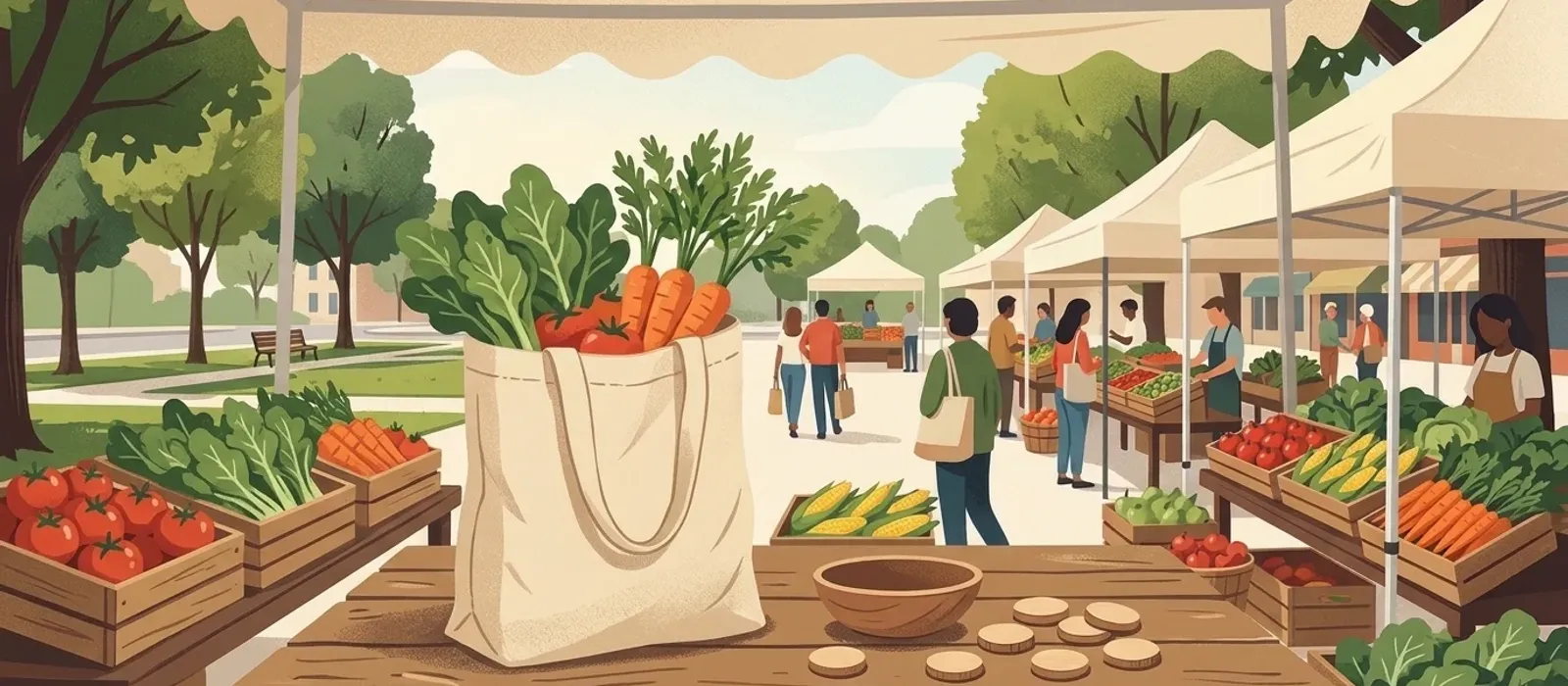
Many farmers markets accept SNAP benefits (food stamps) on an EBT card. Markets do this in one of two ways, and knowing which one your market uses saves time.
1. Find a Market That Accepts SNAP
Look for the SNAP/EBT badge on market listings here (data from the USDA National Farmers Market Directory), then confirm with the market before you go, because vendor lineups change every season. You can also use the official USDA SNAP Retailer Locator.
2. Pay at the Info Booth or at the Vendor
- Central booth (most common): swipe your EBT card at the market information tent and choose an amount. You get wooden or paper tokens to spend with vendors. Unused tokens can usually be spent on a later market day.
- Vendor terminals: some vendors run EBT cards on their own card readers. Look for a "SNAP accepted" sign at the stall.
3. What You Can Buy with SNAP
The same foods as in a store: fruits and vegetables, meat, fish, poultry, dairy, eggs, bread, honey and jam, plus seeds and plants that produce food. You cannot buy hot prepared food, crafts, soap, flowers or alcohol with SNAP. (Source: USDA FNS eligible food items.)
4. Ask About Matching Dollars
Many markets double your SNAP spending on fruits and vegetables through incentive programs such as Double Up Food Bucks, Market Match or Fresh Bucks, often funded by the USDA Gus Schumacher Nutrition Incentive Program (GusNIP). Limits and names vary by state and market, so ask at the info booth.
Tips
- Bring your EBT card and PIN; tokens usually don't give change, so buy in whole-dollar amounts.
- Go early for the best choice; incentive funds can run out late in the season.
- WIC and seniors' vouchers are separate programs. See our WIC and senior voucher guide.