
What's in Season?
Fruits and vegetables by season, based on the USDA SNAP-Ed Seasonal Produce Guide. Pick your state to hide items that are rarely grown locally there.
Spring March – May
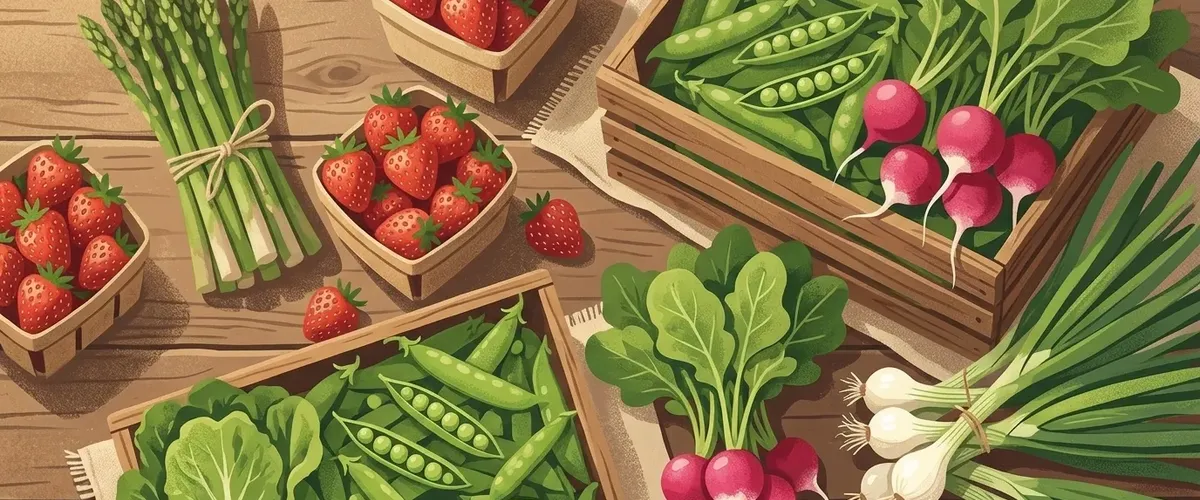
- Apricots
- Asparagus
- Avocados
- Bananas
- Broccoli
- Cabbage
- Carrots
- Celery
- Collard greens
- Garlic
- Herbs
- Kale
- Kiwifruit
- Lemons
- Lettuce
- Limes
- Mushrooms
- Onions
- Peas
- Pineapples
- Radishes
- Rhubarb
- Spinach
- Strawberries
- Swiss chard
- Turnips
Summer June – August
- Apples
- Apricots
- Avocados
- Bananas
- Beets
- Bell peppers
- Blackberries
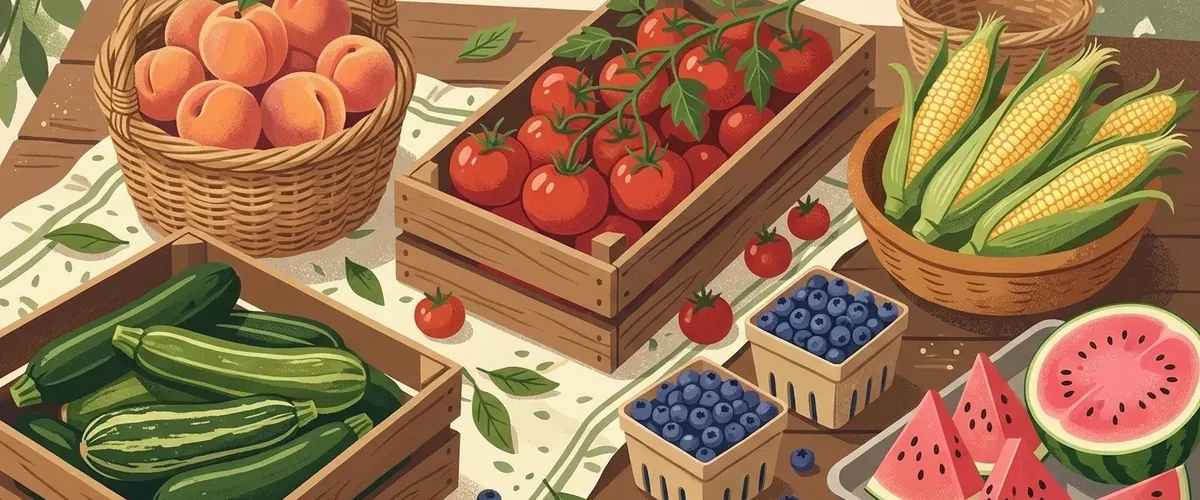
- Blueberries
- Cantaloupe
- Carrots
- Celery
- Cherries
- Corn
- Cucumbers
- Eggplant
- Garlic
- Green beans
- Herbs
- Honeydew melon
- Lemons
- Lima beans
- Limes
- Mangos
- Okra
- Peaches
- Plums
- Raspberries
- Strawberries
- Summer squash
- Tomatillos
- Tomatoes
- Watermelon
- Zucchini
Fall September – November
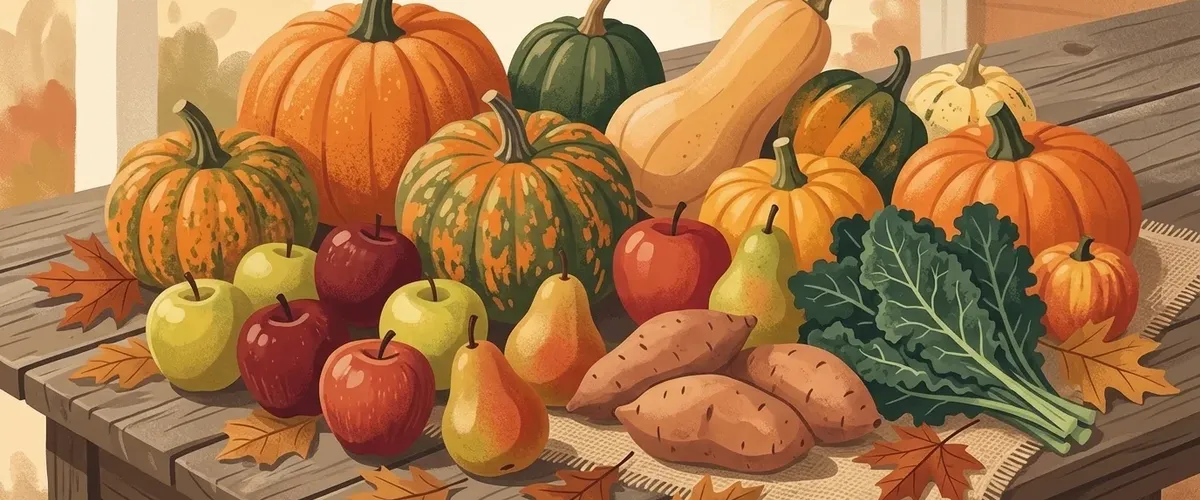
- Apples
- Bananas
- Beets
- Bell peppers
- Broccoli
- Brussels sprouts
- Cabbage
- Carrots
- Cauliflower
- Celery
- Collard greens
- Cranberries
- Garlic
- Ginger
- Grapes
- Green beans
- Herbs
- Kale
- Kiwifruit
- Lemons
- Lettuce
- Limes
- Mangos
- Mushrooms
- Onions
- Parsnips
- Pears
- Peas
- Pineapples
- Potatoes
- Pumpkins
- Radishes
- Raspberries
- Rutabagas
- Spinach
- Sweet potatoes
- Swiss chard
- Turnips
- Winter squash
Winter December – February
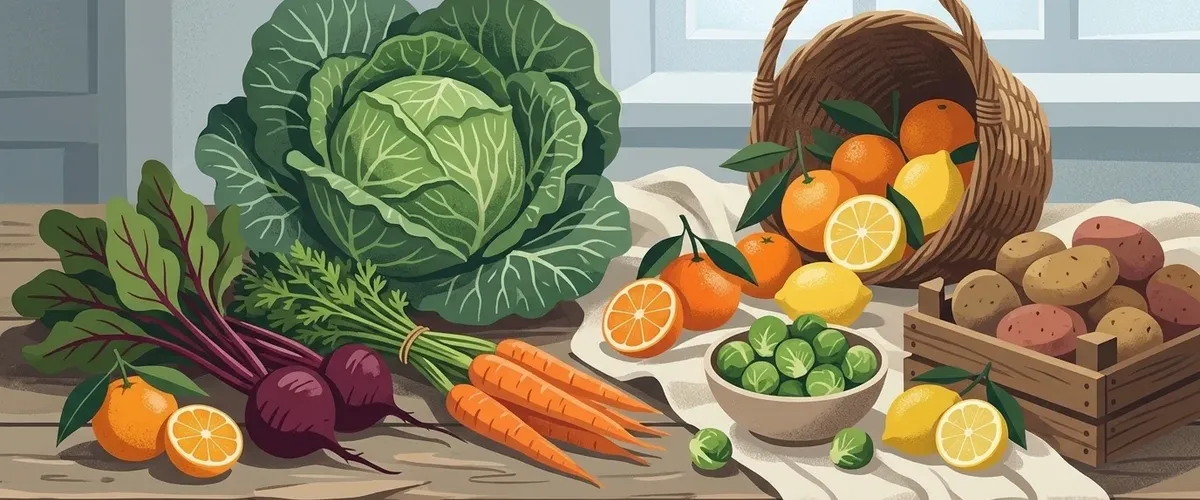
- Apples
- Avocados
- Bananas
- Beets
- Brussels sprouts
- Cabbage
- Carrots
- Celery
- Collard greens
- Grapefruit
- Herbs
- Kale
- Kiwifruit
- Leeks
- Lemons
- Limes
- Onions
- Oranges
- Parsnips
- Pears
- Pineapples
- Potatoes
- Pumpkins
- Rutabagas
- Sweet potatoes
- Swiss chard
- Turnips
- Winter squash
Advertisement
How Local Timing Differs
Seasons arrive earlier in the South and on the West Coast, and later in the North and in the mountains. Strawberries, for example, can start in early spring in Florida and California but often not until June in New England and the upper Midwest. Grey items above are tropical or citrus crops that most of the U.S. can't grow outdoors; they appear in the USDA guide because they are in season at stores.
For exact dates, ask your market or your state's agriculture department. Ready to shop? Find a farmers market near you or read our shopping tips.